
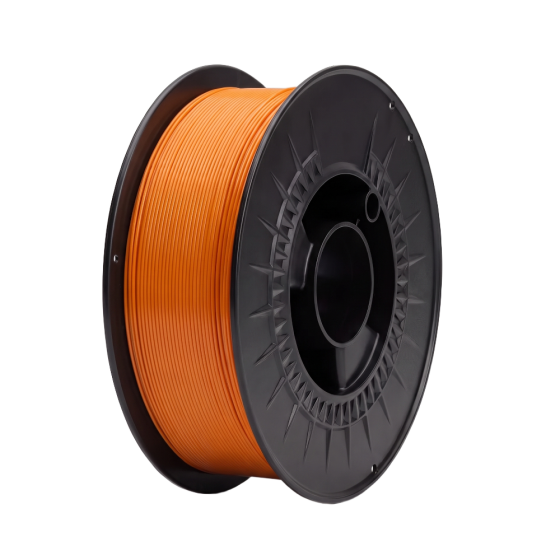
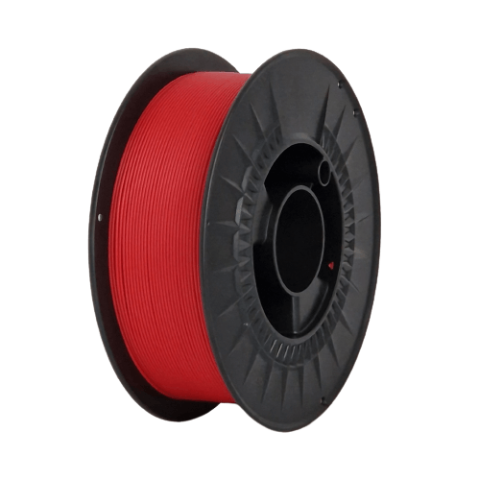
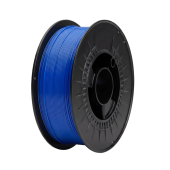
PLA filament
As low as
€12.00
inc. VAT
In stock
Only %1 left
SKU
000028517022
Product Features
- Easy to print and beginner friendly
- Smooth and consistent surface finish
- Good dimensional accuracy
- No warping and good bed adhesion
- Suitable for printing everyday objects and functional parts
- Diameter: 1.75 and 2.85 mm ± 0.03 mm
Good to know
- Compatible with most FDM 3D printers
- 1 kg spools are suitable for all multi-material printing systems (AMS, CFS, etc.)
- Not UV resistant and not suitable for use at temperatures above 55 °C.
PLA for
everyday ideas.
For prototypes, models and practical objects. Easy printing, low shrinkage and more than 50 colours for your next project.
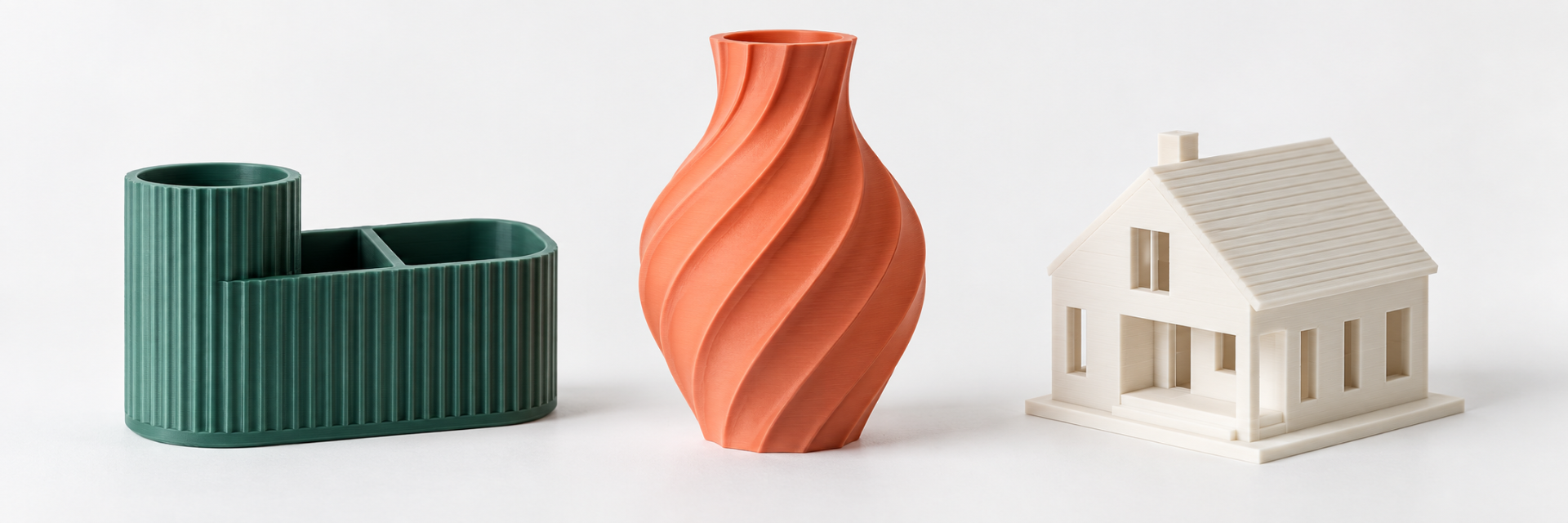
Visualisation of material applications. The products and shades shown are illustrative.
Filament diameter1.75 mm and 2.85 mmTolerance ± 0.03 mm
Applications
Models and prototypes
Models and prototypes
Production
Made in Slovenia
Made in Slovenia
More than 45 shades
for your ideas
From classic shades to vibrant neon colours, translucent options and special finishes with glitter or a metallic sheen. Choose the look that best suits your print.
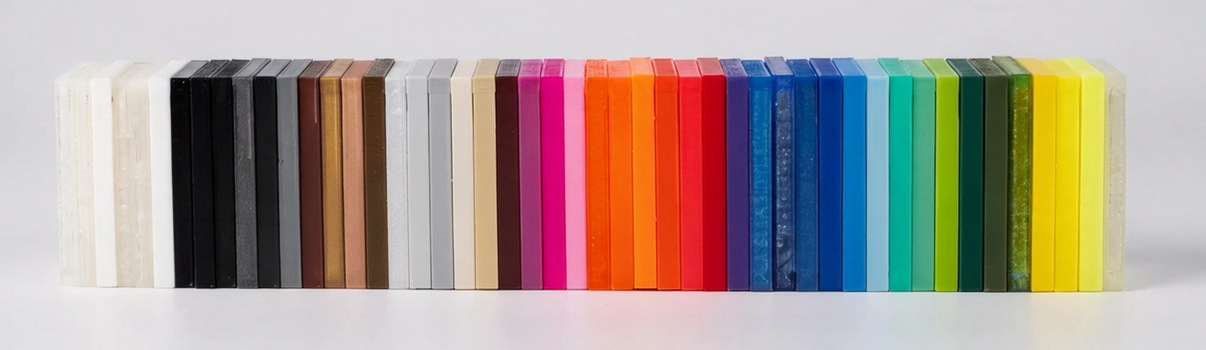
Colours may vary depending on your screen. Current availability is shown in the product options.
When should you choose PLA?
When you need easy printing, a good surface finish and precise details.
- Prototypes and models for checking shape and fit.
- Organisers and holders for indoor use.
- Miniatures and decorations, where shape and colour matter.
From production
to your printer.
Diameter checks, precise mechanical winding and vacuum packaging with desiccant are part of the preparation of every spool.
This gives you a material with a defined diameter tolerance and protection against moisture during storage.

A look at our production process. The video does not show the selected colour.
Start with these settings.
A starting point for standard PLA. Adjust the settings to suit your printer, nozzle, speed and model.
Nozzle temperature
195–225 °C
Bed temperature
40–60 °C
Part cooling
Recommended
Which temperature and profile should you choose?Which temperature and profile should you choose?
For beginners: we recommend the Generic PLA profile in your chosen slicer (PrusaSlicer, Bambu Studio, OrcaSlicer, etc.).
Print speed of 30–70 mm/s
Recommended nozzle temperature: 195–205 °C
Print speed above 150 mm/s
Recommended nozzle temperature: 220–225 °C
Use these recommendations as a starting point and adjust them to the actual material flow rate and your printer's capabilities.
CloseDo not heat the chamber
Do not use chamber heating when printing PLA. If your printer has an enclosed chamber, keep the door open to allow cool air in. In an excessively warm chamber, PLA can soften inside the extruder and cause a jam.
Choosing a nozzle
For standard PLA, use a brass, stainless steel or hardened steel nozzle with a diameter of 0.2 mm or larger. For filaments containing particles, such as Wood or Glitter, use a larger nozzle and follow the recommendations for the specific variant.
Technical material propertiesTechnical material properties
Close
Technical properties of PLA
Reference material values. The properties of the finished 3D printed part also depend on model orientation, print settings, geometry and conditions of use.
| Property | Value | Standard |
|---|---|---|
| Density | 1.24 g/cm³ | — |
| Melt flow rate | 6 g/10 min | ISO 1133A, 210 °C / 2.16 kg |
| Melting temperature | 155 °C | DSC |
| Glass transition temperature | 60 °C | DSC |
| Tensile strength | 45 MPa | ISO 527-1 |
| Tensile modulus | 3500 MPa | ISO 527-1 |
| Elongation at break | ≤ 5 % | ISO 527-1 |
| Notched Charpy impact strength, 23 °C | ≤ 5 kJ/m² | ISO 179-1eA |
| HDT | 60 °C | ISO 75-1 |
These data are reference material values and do not specify the properties of every finished 3D printed part.
Comparison: PLA, PETG, ABS and ASAComparison: PLA, PETG, ABS and ASA
Close
PLA, PETG, ABS or ASA?
PLA is the best starting point for easy, predictable general-purpose 3D printing. For more demanding conditions, choose a material based on the requirements of your part.
| Property | PLA | PETG | ABS | ASA |
|---|---|---|---|---|
| Ease of printing | Very easy | Easy | More demanding | More demanding |
| Shrinkage | Very low | Low | Higher | Higher |
| Stiffness | High | Medium | Medium | Medium |
| Heat resistance | Lower | Medium | Higher | Higher |
| Outdoor use | Limited | Good | Limited | Very good |
How to get a great first layerHow to get a great first layer
Close
How to get a great first layer.
1
Start with a clean print bed
Avoid touching the print surface with your fingers. Oils from your skin can reduce first-layer adhesion.
2
Clean the bed when needed
Use the cleaning method recommended by your print bed manufacturer. Do not use acetone for routine cleaning, as it is not suitable for all PEI surfaces.
3
Check the first layer
The filament should be laid down evenly on the surface, with adjacent lines joined together without excessive squashing.
4
Need more adhesion?
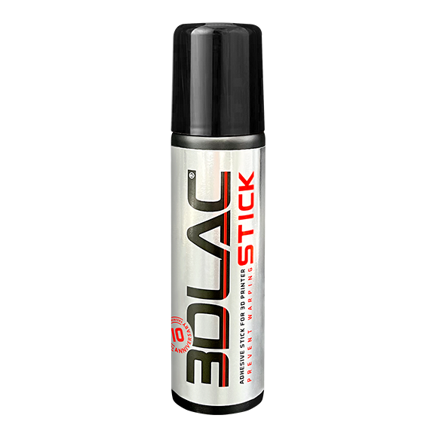
For more demanding models or a small contact area, you can use 3DLAC to improve adhesion to the print bed.
Storing and drying PLA
Store PLA in a dry, dark place, preferably in sealed packaging with desiccant. The recommended storage temperature is between 0 and 40 °C. If the filament shows signs of moisture absorption, dry it before use.
50 °Capproximately 2–4 hours
Frequently asked questions about PLA filament
Is PLA suitable for beginners?Is PLA suitable for beginners?
Yes. Its low shrinkage and simple settings make PLA an excellent choice for getting started with 3D printing.
CloseWhat bed temperature should I use?What bed temperature should I use?
We recommend approximately 40–60 °C as a starting point. Adjust this to suit your print surface and model as needed.
CloseWhy is PLA not sticking to the print bed?Why is PLA not sticking to the print bed?
First, check that the print surface is clean, the first layer is set correctly and the bed temperature is suitable. Oils from your fingers can reduce adhesion. For extra adhesion, you can use 3DLAC.
CloseDo I need to dry PLA before printing?Do I need to dry PLA before printing?
Usually not. If the filament has been exposed to moisture for a long time or shows signs of moisture absorption, we recommend drying it for approximately 4–6 hours at 50 °C.
CloseHow should I store PLA filament?How should I store PLA filament?
Keep it in a dry, dark place, preferably in sealed packaging or a dry box with desiccant.
CloseWhat is the difference between PLA and PETG?What is the difference between PLA and PETG?
PLA is stiffer and generally easier to print. PETG is tougher and has higher heat resistance, so it is often better suited to functional parts exposed to greater loads.
CloseIs PLA suitable for outdoor use?Is PLA suitable for outdoor use?
For long-term outdoor use, we recommend a weather-resistant material such as ASA, particularly when the part will be exposed to sunlight and elevated temperatures.
Close
Related Products
- As low as €14.94inc. VATRegular Price €22.99inc. VAT
- As low as €18.52inc. VATRegular Price €28.49inc. VAT
- As low as €16.19inc. VATRegular Price €24.90inc. VAT
- As low as €19.59inc. VATRegular Price €27.99inc. VAT
- As low as €12.00inc. VAT
- As low as €16.89inc. VATRegular Price €25.99inc. VAT
Upsell Products
- As low as €18.52inc. VATRegular Price €28.49inc. VAT
- As low as €14.94inc. VATRegular Price €22.99inc. VAT
- €9.99inc. VAT
Close
PLA filament

Please complete your information below to login.
Sign In
Create New Account