
3D Filaments
Shop 3DTrcek’s full range of 3D printer filaments — PLA, PETG, TPU, ASA, Nylon & more. Over 70 colors. Trusted by professionals.


Shop by category
All 14 categories →-
-
-
-
-
-
-
- Engineering / Special
-
-
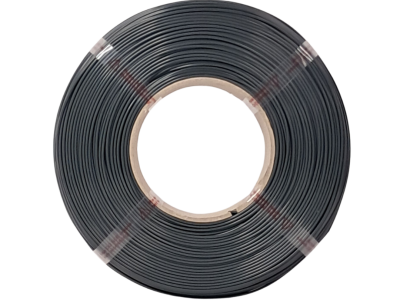
-
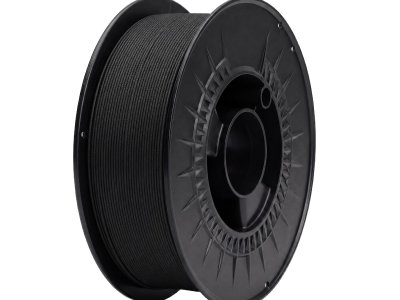
-
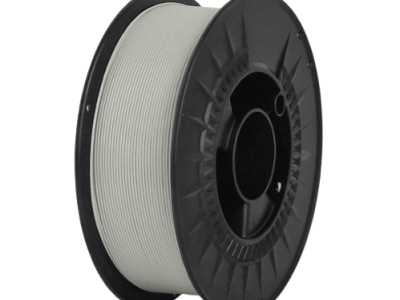
-
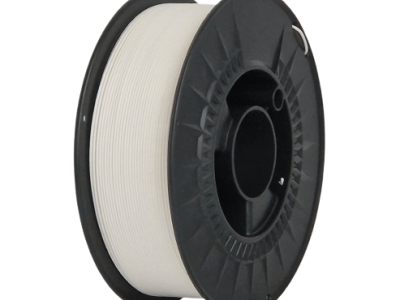
-
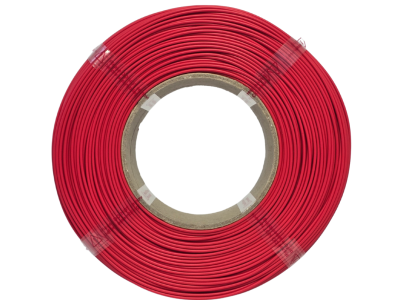


3D Filaments for Engineers, Designers & Makers — The Full Collection at 3DTrcek
Discover the complete 3D printing filament selection from 3DTrcek — engineered for precise applications in prototyping, product design, industry, architecture, and maker projects. From soft TPU to ultra-strong carbon-reinforced PAHT — we’ve got the right material for every build.
Why Choose 3DTrcek Filaments?
- Wide Variety: PLA, PETG, ABS, ASA, TPU, Nylon, PC, HIPS, PVA, Carbon-filled & more
- High Performance: Dimensional accuracy, strong layer bonding, industry-grade print results
- Color Selection: Over 70 color options — matte, silk, transparent, metallic & special finishes
- Compatible & Tested: Perfect for Prusa, Bambu Lab, Creality, Anycubic and others
- Sustainable: Refill spools, minimal packaging & EU production
Material Overview (Highlights)
- PLA: Easy, clean, ideal for everyday prints
- PETG: Strong and chemical-resistant for technical parts
- ABS & ASA: Impact, heat & UV-resistant for outdoor use
- TPU: Flexible, wear-resistant for soft or moving parts
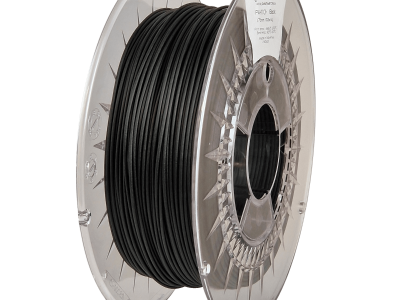
- Nylon & PAHT CF: Ultra-durable, rigid, abrasion-resistant
- PC: High-strength and heat-tolerant for advanced builds
- HIPS & PVA: Ideal as dissolvable support materials
- ESD & V0 Rated: Specialized filaments for electronics & safety-critical use
Technical Highlights
- Spool Sizes: 400g, 1kg, 2.4kg, 5kg, 10kg
- Nozzle Temp: 190–300°C depending on material
- Bed Temp: 0–110°C
- Print Speed: Up to 500 mm/s with high-speed filaments
- Color Options: 70+ including standard, effect, and bundle packs
Made in Europe — Printed Worldwide
3DTrcek filaments are made in Slovenia and trusted across Europe by product designers, architects, labs, and 3D printing communities in Germany, Austria, Croatia, Italy, and beyond.
Which filament suits the part you are printing
PLA prints at the lowest temperatures in this range and stays dimensionally calm, which makes it the safest choice for visual models, prototypes and printing at home. PETG keeps most of that ease and adds chemical resistance and toughness, so it holds up in brackets, enclosures and parts that take the occasional knock. ABS and ASA move the job to higher temperatures and want a warm, draught free chamber, and in return they survive heat, sunlight and outdoor weather. TPU FLEX bends instead of breaking and is the answer for gaskets, grips and dampers, while Nylon and PAHT CF cover gears, jigs and parts that rub against something. HIPS and PVA are support materials rather than structural ones, and the ESD and UL94 V-0 grades exist for electronics and for parts with a fire safety requirement.
Print settings that decide the result
The filaments in this category print between 190 and 300 °C at the nozzle and 0 to 110 °C on the bed, and the window for each material is printed on the spool label. Start in the middle of that window, print a temperature tower and keep the value that gives clean layer bonding without stringing. Flow matters more than speed: the high speed grades are tested up to 500 mm/s, but a hot end that cannot melt fast enough will under extrude long before the motion system runs out. A poor first layer is usually a bed temperature or levelling problem rather than a material problem, so change one variable at a time and reprint the same test. Diameter is held at 1.75 mm within 0.03 mm, which is why a profile you dial in today still works on the next spool of the same material.
Spool sizes, refills and cost per kilogram
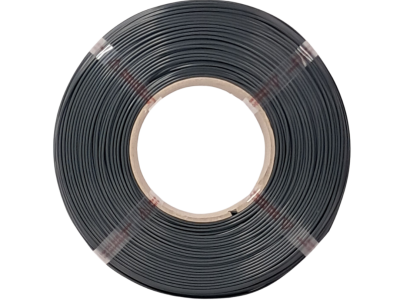
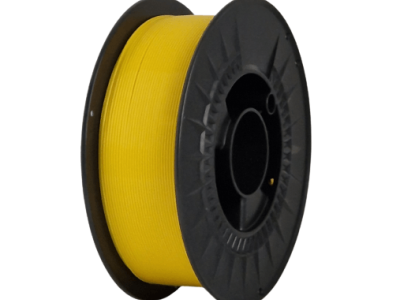
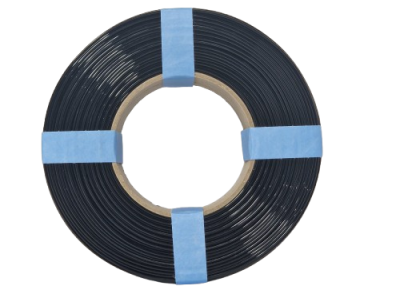
Spools come in 400 g, 1 kg, 2.4 kg, 5 kg and 10 kg, so a colour you print every day does not have to be reloaded every other job. Refill filaments ship without the plastic spool core and mount on a spool you already own, which lowers both the price per kilogram and the amount of plastic you throw away. Recycled grades use reclaimed material and are a sensible choice for jigs, fixtures and drafts, where the surface finish matters less than the cost. A large spool is the cheaper way to buy a colour you are sure about, while 400 g keeps the risk small when you are trying a material for the first time. Everything here is produced in Slovenia and precisely wound, so restocking a colour does not depend on an overseas shipment and the spool does not jam mid print.
Storage, drying and how filament ages
Filament ages through moisture rather than through time, and a spool kept sealed with desiccant will print the same a year after you bought it. Wet filament announces itself: popping or hissing at the nozzle, a rough surface, weak layers and stringing that no retraction setting removes. Nylon, PAHT CF, PVA and TPU take up water fastest and are worth drying before any serious print, while PLA and PETG tolerate a dry room for weeks. Drying means several hours at a temperature below the softening point of the material, which is exactly what a filament dryer or a controlled oven is for. Keep opened spools in a sealed box rather than on the machine, because the spool left out in the open air is the one that fails a fortnight later.