
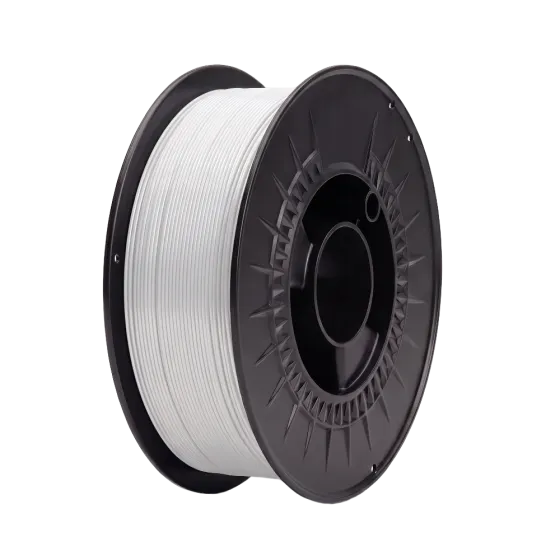
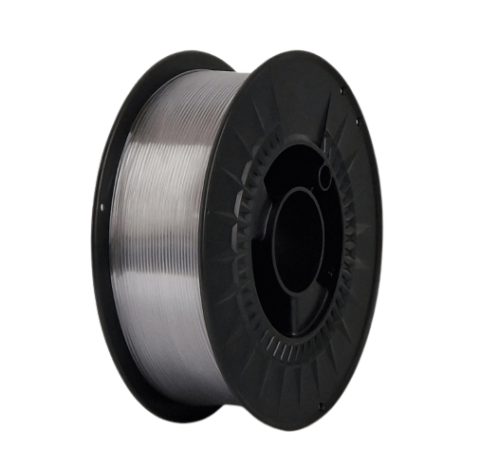
PETG filament
As low as
€13.22
inc. VAT
Regular Price
€18.89inc. VAT
In stock
Only %1 left
SKU
000028517005
Product Features
- Tough material for practical objects and functional prototypes
- Good impact resistance
- Warp-free printing
- Easy to print with good bed adhesion
- Diameter: 1.75 and 2.85 mm ± 0.03 mm
Good to know
- 1 kg spools are suitable for all multi-material printing systems (AMS, CFS, etc.)
- If the filament has been out of its sealed packaging for an extended period, we recommend drying it at 60 °C for 2–4 hours
- Also suitable for outdoor use.
PETG for
parts you put to work.
For brackets, enclosures and functional prototypes. Take your design from a model to a practical part.
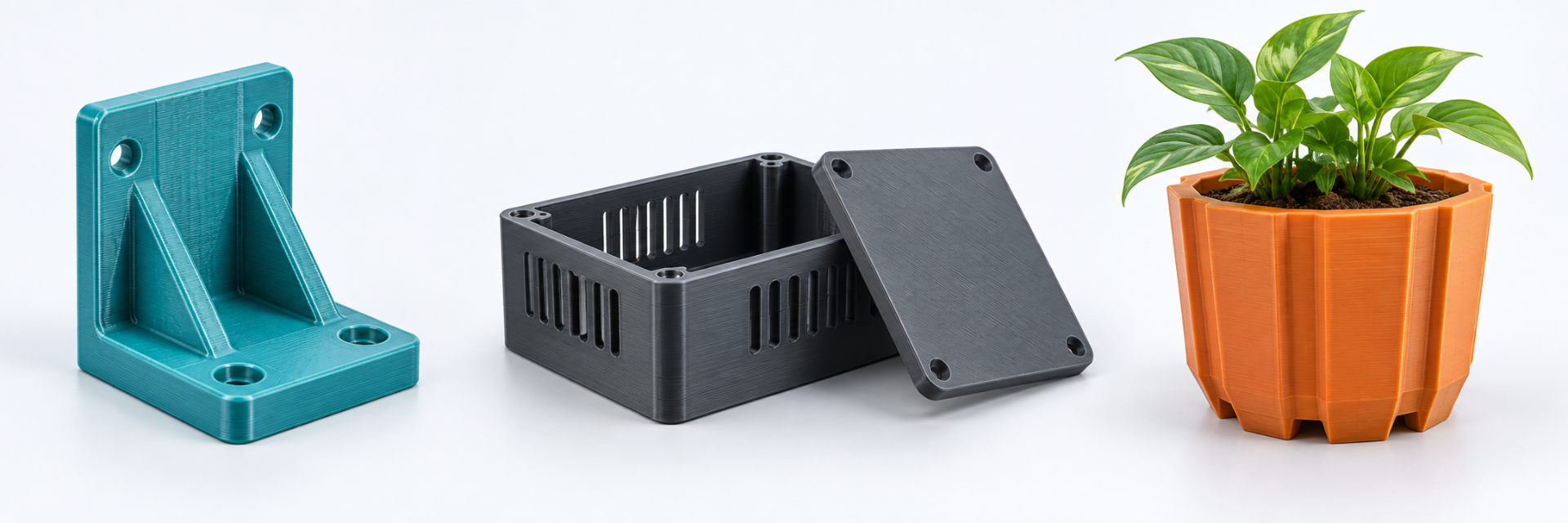
Illustration of material applications. The products and colours shown are illustrative.
Filament diameter1.75 mm and 2.85 mmTolerance ± 0.03 mm
Applications
Functional parts
Functional parts
Production
Made in Slovenia
Made in Slovenia
When should you choose PETG?
When toughness and impact resistance matter.
- Brackets and holders for the workshop, home or equipment.
- Enclosures and protective covers for components.
- Functional prototypes for checking assembly and use.
When should you consider another material?
Ask yourself three questions before choosing:
- What loads will the part carry? Consider layer orientation and part geometry as well.
- Where will the part be used? Check the temperatures and duration of exposure.
- What will it come into contact with? Check chemical resistance to the specific substance.
PETG outdoors.
Our internal tests and users' experience show that parts made from our PETG filament can perform well outdoors for 5 years or more. Durability depends on the conditions of use, colour and load on the part.
Allow for solar heating and mechanical loads when designing your part. Dark parts, particularly black ones, can become very hot; prolonged exposure combined with higher loads may cause deformation.
Choose your
filament colour.
Classic colours, translucent options and vibrant neon shades. Explore the samples below, then select the available colours and pack sizes at the top of the page.
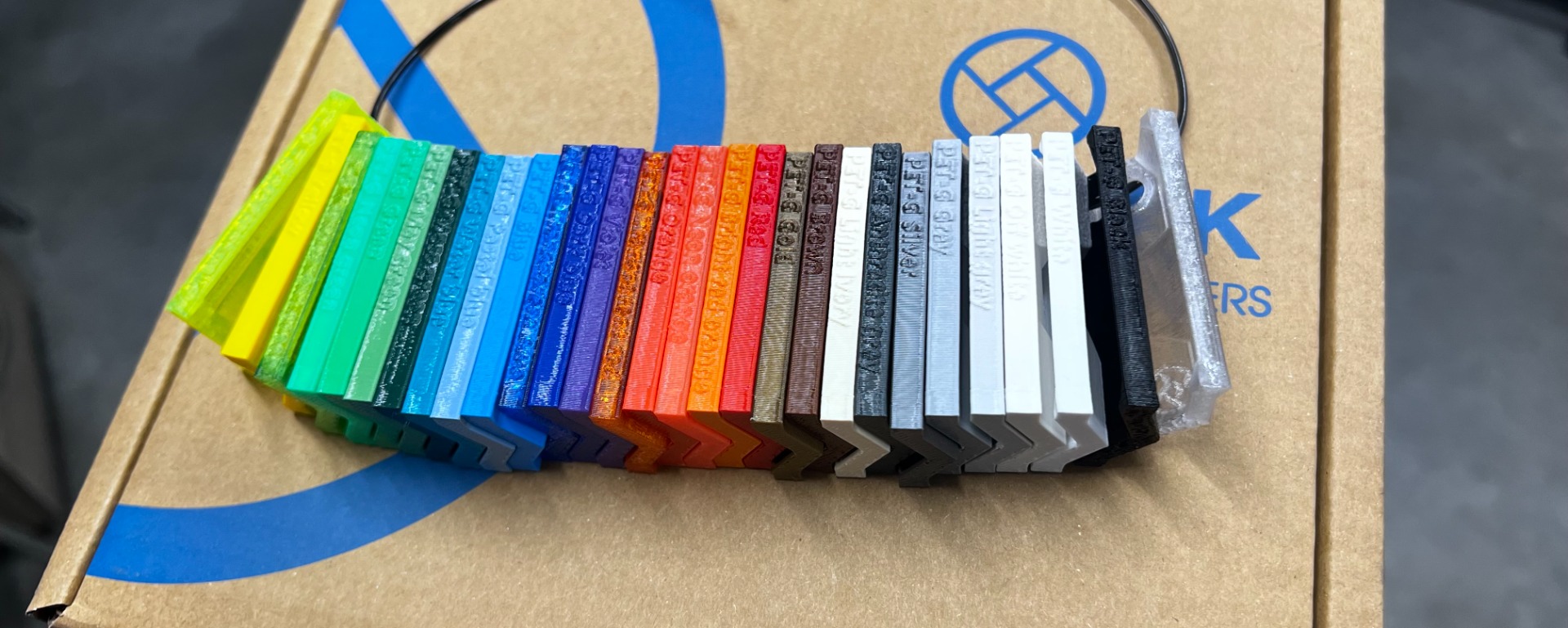
Actual PETG filament samples. Colour appearance depends on your screen and the lighting in the photograph.
From production
to your printer.
Diameter checks, mechanical winding and vacuum packaging with desiccant are part of our filament preparation process.

A look at our production process. The video does not show the selected colour.
Start with these settings.
A starting point for standard PETG. Adjust the settings to suit your printer and model.
Nozzle temperature
230–260 °C
Bed temperature
65–80 °C
Heated chamber
Not recommended
Profile and example settingsProfile and example settings
Start with a PETG profile suitable for your printer. The 3DTrček profile for Bambu Lab is available in the product attachments.
Example: Bambu Lab P1S
Nozzle 0.4 mm, textured PEI build plate.
Starting settings for this example
Nozzle 255 °C, bed 70 °C, speed 100–200 mm/s.
This example applies to the equipment listed. For another printer, check the profile and run a small test print.
ClosePrinting without a heated chamber
Standard PETG can also be printed on an open-frame printer. A heated chamber is not recommended because of the material's relatively low heat resistance. At high print speeds, effective heat removal helps the printed layers cool quickly enough to maintain a good surface finish. Cooling too slowly can result in a wrinkled surface.
Choosing a nozzle and build plate
For standard PETG, you can use a brass, hardened steel, stainless steel or other suitable nozzle. We recommend a smooth or textured PEI build surface.
Technical properties of PETGTechnical properties of PETG
Close
Data for comparison.
Reference properties of the base material from the technical data sheet. The properties of a printed part also depend on its geometry, orientation and print settings.
| Property | Value | Reference standard |
|---|---|---|
| Heat deflection temperature (HDT), 0.45 MPa | 69.7 °C | ISO 75-2 |
| Tensile strength | 53.58 MPa | ISO 527 |
| Flexural strength | 80.02 MPa | ISO 178 |
| Flexural modulus | 2282.82 MPa | ISO 178 |
| Notched Izod impact strength, 23 °C | 7.9 kJ/m² | ISO 180 |
| Flammability at 3.2 mm thickness | V-2 | UL 94 |
HDT is not a continuous service temperature rating. The UL 94 classification applies to the base material at a thickness of 3.2 mm, not to every 3D printed part.
Before your first printBefore your first print
Close
Check the basics first.
1
Choose the right profile
Select PETG, the correct nozzle size and the build plate type in your slicer.
2
Prepare the surface
Follow the build plate manufacturer's instructions for cleaning, applying a coating and removing the print.
3
Print a test piece
Before a longer print, check the first layer and fit with a small sample.
4
Need more adhesion?
For more demanding models or a small contact area, you can use 3DLAC to improve bed adhesion. Follow the 3DLAC instructions and your build plate manufacturer's recommendations.
Storing and drying PETG
If the filament has been out of its sealed packaging for an extended period, we recommend drying it at 60 °C for 2–4 hours. Filament from freshly opened, correctly stored vacuum packaging usually does not need drying beforehand. After use, store it in sealed packaging with desiccant at 0–40 °C.
60 °C2–4 hours
Frequently asked questions about PETG
What can I make with PETG filament?What can I make with PETG filament?
PETG is suitable for brackets, holders, enclosures, protective covers and functional prototypes. Consider the load, part geometry and layer orientation when designing your part.
CloseIs PETG filament suitable for outdoor use and exposure to sunlight?Is PETG filament suitable for outdoor use and exposure to sunlight?
Yes. Our internal tests and users' experience show successful outdoor use of parts made from our PETG filament for 5 years or more. Durability depends on the conditions of use, colour and load. Prolonged exposure to sunlight combined with higher loads can cause deformation, particularly in dark or black parts.
CloseWhen should I dry PETG filament, and for how long?When should I dry PETG filament, and for how long?
If the filament has been out of its sealed packaging for an extended period, we recommend drying it at 60 °C for 2–4 hours. Filament from freshly opened, correctly stored vacuum packaging usually does not need drying beforehand. After use, store it in sealed packaging with desiccant.
CloseAre 1 kg PETG spools compatible with AMS and CFS systems?Are 1 kg PETG spools compatible with AMS and CFS systems?
Yes. Our 1 kg PETG spools are suitable for all multi-material printing systems, including AMS and CFS.
CloseWhich diameters is PETG filament available in?Which diameters is PETG filament available in?
PETG filament is available in 1.75 mm and 2.85 mm diameters with a tolerance of ± 0.03 mm. Choose the diameter that matches your printer.
CloseWhat does an HDT of 69.7 °C mean for PETG filament?What does an HDT of 69.7 °C mean for PETG filament?
HDT is the temperature at which a specimen deflects under a specified load. The value of 69.7 °C is a reference property of the base material, not a continuous service temperature rating for every printed part.
CloseIs PETG filament UV resistant?Is PETG filament UV resistant?
PETG is not rated as a UV-resistant material and is not suitable for high temperatures or heavy mechanical loads. Nevertheless, our internal testing and customers' experience show that it performs well in various outdoor applications, including marine uses and accessories for video surveillance and telecommunications, such as antenna and camera mounts.
Close| Alternate URL (hreflang) | Tartós PETG filament funkcionális alkatrészekhez. Ötvözi az erősséget és a rugalmasságot, alkalmas műszaki alkalmazásokhoz. |
|---|
Close
- -30%
PETG filament

Please complete your information below to login.
Sign In
Create New Account